

Which Outfit Will Win? The Google or Some Bunch of Busy Bodies
July 30, 2024
 This essay is the work of a dumb humanoid. No smart software required.
It may not be the shoot out at the OK Corral, but the dust up is likely to be a fan favorite. It is possible that some crypto outfit will find a way to issue an NFT and host pay-per-view broadcasts of the committee meetings, lawyer news conferences, and pundits recycling press releases. On the other hand, maybe the shoot out is a Hollywood deal. Everyone knows who is going to win before the real action begins.
“Third Party Cookies Have Got to Go” reports:
After reading Google’s announcement that they no longer plan to deprecate third-party cookies, we wanted to make our position clear. We have updated our TAG finding Third-party cookies must be removed to spell out our concerns.

A great debate is underway. Who or what wins? Experience suggests that money has an advantage in this type of disagreement. Thanks, MSFT. Good enough.
Who is making this draconian statement? A government regulator? A big-time legal eagle representing an NGO? Someone running for president of the United States? A member of the CCP? Nope, the World Wide Web Consortium or W3C. This group was set up by Tim Berners-Lee, who wanted to find and link documents at CERN. The outfit wants to cook up Web standards, much to the delight of online advertising interests and certain organizations monitoring Web traffic. Rules allow crafting ways to circumvent their intent and enable the magical world of the modern Internet. How is that working out? I thought the big technology companies set standards like no “soft 404s” or “sorry, Chrome created a problem. We are really, really sorry.”
The write up continues:
We aren’t the only ones who are worried. The updated RFC that defines cookies says that third-party cookies have “inherent privacy issues” and that therefore web “resources cannot rely upon third-party cookies being treated consistently by user agents for the foreseeable future.” We agree. Furthermore, tracking and subsequent data collection and brokerage can support micro-targeting of political messages, which can have a detrimental impact on society, as identified by Privacy International and other organizations. Regulatory authorities, such as the UK’s Information Commissioner’s Office, have also called for the blocking of third-party cookies.
I understand, but the Google seems to be doing one of those “let’s just dump this loser” moves. Revenue is more important than the silly privacy thing. Users who want privacy should take control of their technology.
The W3C points out:
The unfortunate climb-down will also have secondary effects, as it is likely to delay cross-browser work on effective alternatives to third-party cookies. We fear it will have an overall detrimental impact on the cause of improving privacy on the web. We sincerely hope that Google reverses this decision and re-commits to a path towards removal of third-party cookies.
Now the big question: “Who is going to win this shoot out?”
Normal folks might compromise or test a number of options to determine which makes the most sense at a particularly interesting point in time. There is post-Covid weirdness, the threat of escalating armed conflict in what six, 27, or 95 countries, and financial brittleness. That anti-fragile handwaving is not getting much traction in my opinion.
At one end of the corral are the sleek, technology wizards. These norm core folks have phasers, AI, and money. At the other end of the corral are the opponents who look like a random selection of Café de Paris customers. Place you bets.
Stephen E Arnold, July 30, 2024
.
Let Go of My Throat: The Academic Journal Grip of Death
July 30, 2024
There are several problems with the current system of academic publishing, like fake research and citation feedback loops. Then there is the nasty structure of the system itself. Publishers hold the very institutions that produce good research over a financial barrel when it comes to accessing and furthering that research. Some academics insist it is high time to ditch the exploitative (and science-squelching) model. The Guardian vows, “Academic Journals Are a Lucrative Scam—and We’re Determined to Change That.” Writer and political science professor Arash Abizadeh explains:
“The commercial stranglehold on academic publishing is doing considerable damage to our intellectual and scientific culture. As disinformation and propaganda spread freely online, genuine research and scholarship remains gated and prohibitively expensive. For the past couple of years, I worked as an editor of Philosophy & Public Affairs, one of the leading journals in political philosophy. It was founded in 1972, and it has published research from renowned philosophers such as John Rawls, Judith Jarvis Thomson and Peter Singer. Many of the most influential ideas in our field, on topics from abortion and democracy to famine and colonialism, started out in the pages of this journal. But earlier this year, my co-editors and I and our editorial board decided we’d had enough, and resigned en masse. We were sick of the academic publishing racket and had decided to try something different. We wanted to launch a journal that would be truly open access, ensuring anyone could read our articles. This will be published by the Open Library of Humanities, a not-for-profit publisher funded by a consortium of libraries and other institutions.”
Abizadeh explores how academic publishing got to the point where opening up access amounts to a rebellion of sorts. See the write-up for more details, but basically: Publishers snapped up university-press journals, hiked prices, and forced libraries to buy in unwanted bundles. But what about those free, “open-access” articles? Most are not free so much as prepaid—by the authors themselves. Or, more often, their universities. True, or “diamond,” open access is the goal of Abizadeh and his colleagues. Free to write, free to read, and funded by universities, libraries, and other organizations. Will more editors join the effort to wriggle out of academic journals’ stranglehold? And how will publishing behemoths fight back?
Cynthia Murrell, July 30, 2024
AI Reduces Productivity: Quick Another Study Needed Now
July 29, 2024
 This essay is the work of a dinobaby. Unlike some folks, no smart software improved my native ineptness.
At lunch one of those at my table said with confidence that OpenAI was going to lose billions in 2024. Another person said, “Meta has published an open source AI manifesto.” I said, “Please, pass the pepper.”
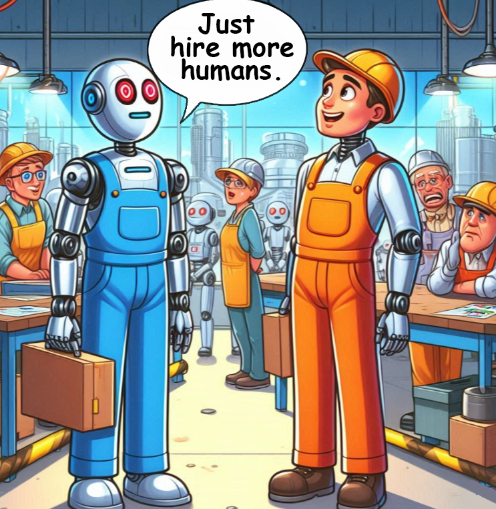
The AI marketing and PR generators are facing a new problem. More information about AI is giving me a headache. I want to read about the next big thing delivering Ford F-150s filled with currency to my door. Enough of this Debbie Downer talk.
Then I spotted this article in Forbes Magazine, the capitalist tool. “77% Of Employees Report AI Has Increased Workloads And Hampered Productivity, Study Finds.”
The write up should bring tears of joy to those who thought they would be replaced by one of the tech giants smart software concoctions. Human employees hallucinate too. But humans have a couple of notable downsides. First, they require care and feeding, vacations, educational benefits and/or constant retraining, and continuous injections of cash. Second, they get old and walk out the door with expertise when they retire or just quit. And, third, they protest and sometimes litigate. That means additional costs and maybe a financial penalty to the employer. Smart software, on the other hand, does not impose those costs. The work is okay, particularly for intense knowledge work like writing meaningless content for search engine optimization or flipping through thousands of pages of documents looking for a particular name or a factoid of perceived importance.
But this capitalist tool write up says:
Despite 96% of C-suite executives expecting AI to boost productivity, the study reveals that, 77% of employees using AI say it has added to their workload and created challenges in achieving the expected productivity gains. Not only is AI increasing the workloads of full-time employees, it’s hampering productivity and contributing to employee burnout.
Interesting. An Upwork wizard Kelly Monahan is quoted to provide a bit of context I assume:
“In order to reap the full productivity value of AI, leaders need to create an AI-enhanced work model,” Monahan continues. “This includes leveraging alternative talent pools that are AI-ready, co-creating measures of productivity with their workforces, and developing a deep understanding of and proficiency in implementing a skills-based approach to hiring and talent development. Only then will leaders be able to avoid the risk of losing critical workers and advance their innovation agenda.”
The phrase “full productivity value” is fascinating. There’s a productivity payoff somewhere amidst the zeros and ones in the digital Augean Stable. There must be a pony in there?
What’s the fix? Well, it is not AI because the un-productive or intentionally non-productive human who must figure out how to make smart software pirouette can get trained up in AI and embrace any AI consultant who shows up to explain the ropes.
But the article is different from the hyperbolic excitement of those in the Red Alert world and the sweaty foreheads at AI pitch meetings. AI does not speed up. AI slows down. Slowing down means higher costs. AI is supposed to reduce costs. I am confused.
Net net: AI is coming productive or not. When someone perceives a technology will reduce costs, install that software. The outputs will be good enough. One hopes.
Stephen E Arnold, July 29, 2024
Google and Third-Party Cookies: The Writing Is on the Financial Projection Worksheet
July 25, 2024
 This essay is the work of a dumb dinobaby. No smart software required.
I have been amused by some of the write ups about Google’s third-party cookie matter. Google is the king of the jungle when it comes to saying one thing and doing another. Let’s put some wood behind social media. Let’s make that Dodgeball thing take off. Let’s make that AI-enhanced search deliver more user joy. Now we are in third-party cookie revisionism. Even Famous Amos has gone back to its “original” recipe after the new and improved Famous Amos chips tanked big time. Google does not want to wait to watch ad and data sale-related revenue fall. The Google is changing its formulation before the numbers arrive.
“Google No Longer Plans to Eliminate Third-Party Cookies in Chrome” explains:
Google announced its cookie updates in a blog post shared today, where the company said that it instead plans to focus on user choice.
What percentage of Google users alter default choices? Don’t bother to guess. The number is very, very few. The one-click away baloney is a fabrication, an obfuscation. I have technical support which makes our systems as secure as possible given the resources an 80-year-old dinobaby has. But check out those in the rest home / warehouse for the soon to die? I would wager one US dollar that absolutely zero individuals will opt out of third-party cookies. Most of those in Happy Trail Ending Elder Care Facility cannot eat cookies. Opting out? Give me a break.

The MacRumors’ write up continues:
Back in 2020, Google claimed that it would phase out support for third-party cookies in Chrome by 2022, a timeline that was pushed back multiple times due to complaints from advertisers and regulatory issues. Google has been working on a Privacy Sandbox to find ways to improve privacy while still delivering info to advertisers, but third-party cookies will now be sticking around so as not to impact publishers and advertisers.
The Apple-centric online publication notes that UK regulators will check out Google’s posture. Believe me, Googzilla sits up straight when advertising revenue is projected to tank. Losing click data which can be relicensed, repurposed, and re-whatever is not something the competitive beastie enjoys.
MacRumors is not anti-Google. Hey, Google pays Apple big bucks to be “there” despite Safari. Here’s the online publications moment of hope:
Google does not plan to stop working on its Privacy Sandbox APIs, and the company says they will improve over time so that developers will have a privacy preserving alternative to cookies. Additional privacy controls, such as IP Protection, will be added to Chrome’s Incognito mode.
Correct. Google does not plan. Google outputs based on current situational awareness. That’s why Google 2020 has zero impact on Google 2024.
Three observations which will pain some folks:
- Google AI search and other services are under a microscope. I find the decision one which may increase scrutiny, not decrease regulators’ interest in the Google. Google made a decision which generates revenue but may increase legal expenses
- No matter how much money swizzles at each quarter’s end, Google’s business model may be more brittle than the revenue and profit figures suggest. Google is pumping billions into self driving cars, and doing an about face on third party cookies? The new Google puzzles me because search seems to be in the background.
- Google’s management is delivering revenues and profit, so the wizardly leaders are not going anywhere like some of Google’s AI initiatives.
Net net: After 25 years, the Google still baffles me. Time to head for Philz Coffee.
Stephen E Arnold, July 25, 2024
Crowd What? Strike Who?
July 24, 2024
 This essay is the work of a dumb dinobaby. No smart software required.
How are those Delta cancellations going? Yeah, summer, families, harried business executives, and lots of hand waving. I read a semi-essay about the minor update misstep which caused blue to become a color associated with failure. I love the quirky sad face and the explanations from the assorted executives, experts, and poohbahs about how so many systems could fail in such a short time on a global scale.
In “Surely Microsoft Isn’t Blaming EU for Its Problems?” I noted six reasons the CrowdStrike issue became news instead of a system administrator annoyance. In a nutshell, the reasons identified harken back to Microsoft’s decision to use an “open design.” I like the phrase because it beckons a wide range of people to dig into the plumbing. Microsoft also allegedly wants to support its customers with older computers. I am not sure older anything is supported by anyone. As a dinobaby, I have first-hand experience with this “we care about legacy stuff.” Baloney. The essay mentions “kernel-level access.” How’s that working out? Based on CrowdStrike’s remarkable ability to generate PR from exceptions which appear to have allowed the super special security software to do its thing, that access sure does deliver. (Why does the nationality of CrowdStrike’s founder not get mentioned? Dmitri Alperovitch, a Russian who became a US citizen and a couple of other people set up the firm in 2012. Is there any possibility that the incident was a test play or part of a Russian long game?)

Satan congratulates one of his technical professionals for an update well done. Thanks, MSFT Copilot. How’re things today? Oh, that’s too bad.
The essay mentions that the world today is complex. Yeah, complexity goes with nifty technology, and everyone loves complexity when it becomes like an appliance until it doesn’t work. Then fixes are difficult because few know what went wrong. The article tosses in a reference to Microsoft’s “market size.” But centralization is what an appliance does, right? Who wants a tube radio when the radio can be software defined and embedded in another gizmo like those FM radios in some mobile devices. Who knew? And then there is a reference to “security.” We are presented with a tidy list.
The one hitch in the git along is that the issue emerges from a business culture which has zero to do with technology. The objective of a commercial enterprise is to generate profits. Companies generate profits by selling high, subtracting costs, and keeping the rest for themselves and stakeholders.
Hiring and training professionals to do jobs like quality checks, environmental impact statements, and ensuring ethical business behavior in work processes is overhead. One can hire a blue chip consulting firm and spark an opioid crisis or deprecate funding for pre-release checks and quality assurance work.
Engineering excellence takes time and money. What’s valued is maximizing the payoff. The other baloney is marketing and PR to keep regulators, competitors, and lawyers away.
The write up encapsulates the reason that change will be difficult and probably impossible for a company whether in the US or Ukraine to deliver what the customer expects. Regulators have failed to protect citizens from the behaviors of commercial enterprises. The customers assume that a big company cares about excellence.
I am not pessimistic. I have simply learned to survive in what is a quite error-prone environment. Pundits call the world fragile or brittle. Those words are okay. The more accurate term is reality. Get used to it and knock off the jargon about failure, corner cutting, and profit maximization. The reality is that Delta, blue screens, and yip yap about software chock full of issues define the world.
Fancy talk, lists, and entitled assurances won’t do the job. Reality is here. Accept it and blame.
Stephen E Arnold, July 24, 2024
Automating to Reduce Staff: Money Talks, Employees? Yeah, Well
July 24, 2024
 This essay is the work of a dinobaby. Unlike some folks, no smart software improved my native ineptness.
Are you a developer who oversees a project? Are you one of those professionals who toiled to understand the true beauty of a PERT chart invented by a Type A blue-chip consulting firm I have heard? If so, you may sport these initials on your business card: PMP, PMI-RMP, PRINCE2, etc. I would suggest that Google is taking steps to eliminate your role. How do I know the death knell tolls for thee? Easy. I read “Google Brings AI Agent Platform Project Oscar Open Source.” The write up doesn’t come out and say, “Dev managers or project managers, find your future elsewhere, but the intent bubbles beneath the surface of the Google speak.

A 35-year-old executive gets the good news. As a project manager, he can now seek another information-mediating job at an indendent plumbing company, a local dry cleaner, or the outfit that repurposes basketball courts to pickleball courts. So many futures to find. Thanks, MSFT Copilot. That’s a pretty good Grim Reaper. The former PMP looks snappy too. Well, good enough.
The “Google Brings AI Agent Platform Project Oscar Open Source” real “news” story says:
Google has announced Project Oscar, a way for open-source development teams to use and build agents to manage software programs.
Say hi, to Project Oscar. The smart software is new, so expect it to morph, be killed, resurrected, and live a long fruitful life.
The write up continues:
“I truly believe that AI has the potential to transform the entire software development lifecycle in many positive ways,” Karthik Padmanabhan, lead Developer Relations at Google India, said in a blog post. “[We’re] sharing a sneak peek into AI agents we’re working on as part of our quest to make AI even more helpful and accessible to all developers.” Through Project Oscar, developers can create AI agents that function throughout the software development lifecycle. These agents can range from a developer agent to a planning agent, runtime agent, or support agent. The agents can interact through natural language, so users can give instructions to them without needing to redo any code.
Helpful? Seems like it. Will smart software reduce costs and allow for more “efficiency methods” to be implemented? Yep.
The article includes a statement from a Googler; to wit:
“We wondered if AI agents could help, not by writing code which we truly enjoy, but by reducing disruptions and toil,” Balahan said in a video released by Google. Go uses an AI agent developed through Project Oscar that takes issue reports and “enriches issue reports by reviewing this data or invoking development tools to surface the information that matters most.” The agent also interacts with whoever reports an issue to clarify anything, even if human maintainers are not online.
Where is Google headed with this “manage” software programs? A partial answer may be deduced from this write up from Linklemon. Its commercial “We Automate Workflows for Small to Medium (sic) Businesses.” The image below explains the business case clearly:
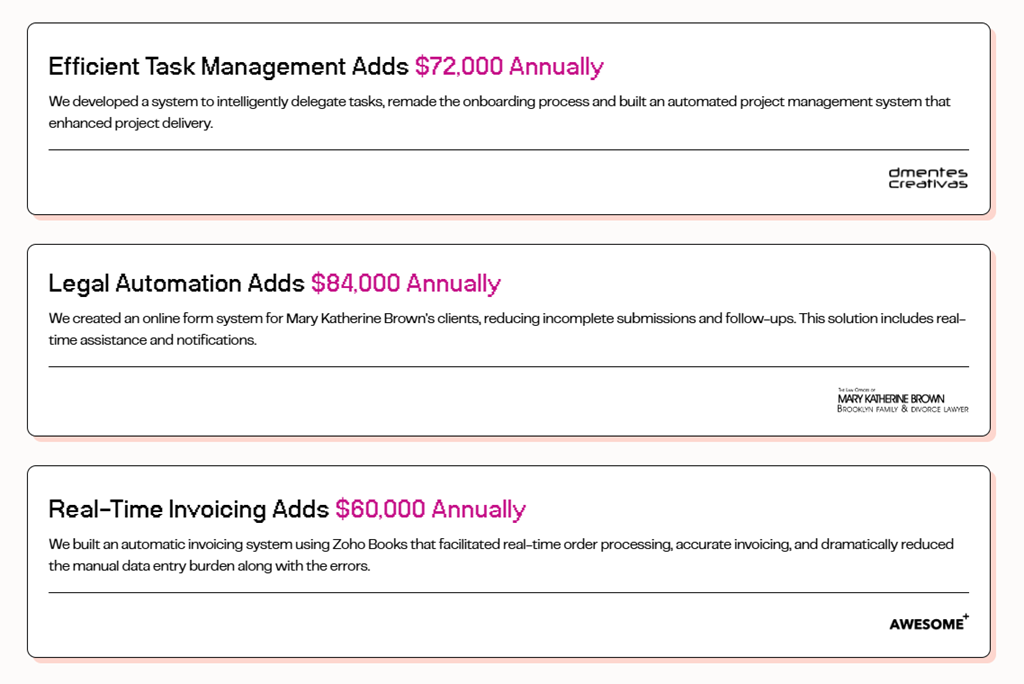
Those purple numbers are generated by chopping staff and making an existing system cheaper to operate. Translation: Find your future elsewhere, please.”
My hunch is that if the automation in Google India is “good enough,” the service will be tested in the US. Once that happens, Microsoft and other enterprise vendors will jump on the me-too express.
What’s that mean? Oh, heck, I don’t want to rerun that tired old “find your future elsewhere line,” but I will: Many professionals who intermediate information will here, “Great news, you now have the opportunity to find your future elsewhere.” Lucky folks, right, Google.
Stephen E Arnold, July 24, 2024
The Logic of Good Enough: GitHub
July 22, 2024
What happens when a big company takes over a good thing? Here is one possible answer. Microsoft acquired GitHub in 2018. Now, “‘GitHub’ Is Starting to Feel Like Legacy Software,” according Misty De Méo at The Future Is Now blog. And by “legacy,” she means outdated and malfunctioning. Paint us unsurprised.
De Méo describes being unable to use a GitHub feature she had relied on for years: the blame tool. She shares her process of tracking down what went wrong. Development geeks can see the write-up for details. The point is, in De Méo’s expert opinion, those now in charge made a glaring mistake. She observes:
“The corporate branding, the new ‘AI-powered developer platform’ slogan, makes it clear that what I think of as ‘GitHub’—the traditional website, what are to me the core features—simply isn’t Microsoft’s priority at this point in time. I know many talented people at GitHub who care, but the company’s priorities just don’t seem to value what I value about the service. This isn’t an anti-AI statement so much as a recognition that the tool I still need to use every day is past its prime. Copilot isn’t navigating the website for me, replacing my need to the website as it exists today. I’ve had tools hit this phase of decline and turn it around, but I’m not optimistic. It’s still plenty usable now, and probably will be for some years to come, but I’ll want to know what other options I have now rather than when things get worse than this.”
The post concludes with a plea for fellow developers to send De Méo any suggestions for GitHub alternatives and, in particular, a good local blame tool. Let us just hope any viable alternatives do not also get snapped up by big tech firms anytime soon.
Cynthia Murrell, July 23, 2024
What? Cloud Computing Costs Cut from Business Budgets
July 18, 2024
Many companies offload their data storage and computing needs to third parties aka cloud computing providers. Leveraging cloud computing was viewed as a great way to lower technology budgets, but with rising inflation and costs that perspective is changing. The BBC wrote an article about the changes in the cloud: “Are Rainy Days Ahead For Cloud Computing?”
Companies are reevaluating their investments in cloud computing, because the price tags are too high. The cloud was advertised as cheaper, easier, and faster. Businesses aren’t seeing any productive gains. Larger companies are considering dumping the cloud and rerouting their funds to self-hosting again. Clouding computing still has its benefits, especially for smaller companies who can’t invest in their technology infrastructure. Security is another concern:
“‘A key factor in our decision was that we have highly proprietary R&D data and code that must remain strictly secure,’ says Markus Schaal, managing director at the German firm. “If our investments in features, patches, and games were leaked, it would be an advantage to our competitors. While the public cloud offers security features, we ultimately determined we needed outright control over our sensitive intellectual property. "As our AI-assisted modelling tools advanced, we also required significantly more processing power that the cloud could not meet within budget.”
He adds:
“We encountered occasional performance issues during heavy usage periods and limited customization options through the cloud interface. Transitioning to a privately-owned infrastructure gave us full control over hardware purchasing, software installation, and networking optimized for our workloads.”
Cloud computing has seen its golden era, but it’s not disappearing. It’s still a useful computing tool, but won’t be the main infrastructure for companies that want to lower costs, stay within budget, secure their software, and other factors.
Whitney Grace, July 18, 2024
AI and Human Workers: AI Wins for Now
July 17, 2024
When it come to US employment news, an Australian paper does not beat around the bush. Citing a recent survey from the Federal Reserve Bank of Richmond, The Sydney Morning Herald reports, “Nearly Half of US Firms Using AI Say Goal Is to Cut Staffing Costs.” Gee, what a surprise. Writer Brian Delk summarizes:
“In a survey conducted earlier this month of firms using AI since early 2022 in the Richmond, Virginia region, 45 per cent said they were automating tasks to reduce staffing and labor costs. The survey also found that almost all the firms are using automation technology to increase output. ‘CFOs say their firms are tapping AI to automate a host of tasks, from paying suppliers, invoicing, procurement, financial reporting, and optimizing facilities utilization,’ said Duke finance professor John Graham, academic director of the survey of 450 financial executives. ‘This is on top of companies using ChatGPT to generate creative ideas and to draft job descriptions, contracts, marketing plans, and press releases.’ The report stated that over the past year almost 60 per cent of companies surveyed have ‘have implemented software, equipment, or technology to automate tasks previously completed by employees.’ ‘These companies indicate that they use automation to increase product quality (58 per cent of firms), increase output (49 per cent), reduce labor costs (47 per cent), and substitute for workers (33 per cent).’”
Delk points to the Federal Reserve Bank of Dallas for a bit of comfort. Its data shows the impact of AI on employment has been minimal at the nearly 40% of Texas firms using AI. For now. Also, the Richmond survey found manufacturing firms to be more likely (53%) to adopt AI than those in the service sector (43%). One wonders whether that will even out once the uncanny valley has been traversed. Either way, it seems businesses are getting more comfortable replacing human workers with cheaper, more subservient AI tools.
Cynthia Murrell, July 17, 2024
What Will the AT&T Executives Serve Their Lawyers at the Security Breach Debrief?
July 15, 2024
![dinosaur30a_thumb_thumb_thumb_thumb_[1]_thumb_thumb](https://arnoldit.com/wordpress/wp-content/uploads/2024/07/dinosaur30a_thumb_thumb_thumb_thumb_1_thumb_thumb-1.gif "dinosaur30a_thumb_thumb_thumb_thumb_[1]_thumb_thumb") This essay is the work of a dinobaby. Unlike some folks, no smart software improved my native ineptness.
This essay is the work of a dinobaby. Unlike some folks, no smart software improved my native ineptness.
On the flight back to my digital redoubt in rural Kentucky, I had the thrill of sitting behind a couple of telecom types who were laughing at the pickle AT&T has plopped on top of what I think of a Judge Green slushee. Do lime slushees and dill pickles go together? For my tastes, nope. Judge Green wanted to de-monopolize the Ma Bell I knew and loved. (Yes, I cashed some Ma Bell checks and I had a Young Pioneers hat.)
We are back to what amounts a Ma Bell trifecta: AT&T (the new version which wears spurs and chaps), Verizon (everyone’s favorite throw back carrier), and the new T-Mobile (bite those customer pocketbooks as if they were bratwursts mit sauerkraut). Each of these outfits is interesting. But at the moment, AT&T is in the spotlight.
“Data of Nearly All AT&T Customers Downloaded to a Third-Party Platform in a 2022 Security Breach” dances around a modest cyber misstep at what is now a quite old and frail Ma Bell. Imagine the good old days before the Judge Green decision to create Baby Bells. Security breaches were possible, but it was quite tough to get the customer data. Attacks were limited to those with the knowledge (somewhat tough to obtain), the tools (3B series computers and lots of mainframes), and access to network connections. Technology has advanced. Consequently competition means that no one makes money via security. Security is better at old-school monopolies because money can be spent without worrying about revenue. As one AT&T executive said to my boss at a blue-chip consulting company, “You guys charge so much we will have to get another railroad car filled with quarters to pay your bill.” Ho ho ho — except the fellow was not joking. At the pre-Judge Green AT&T, spending money on security was definitely not an issue. Today? Seems to be different.
A more pointed discussion of Ma Bell’s breaking her hip again appears in “AT&T Breach Leaked Call and Text Records from Nearly All Wireless Customers” states:
AT&T revealed Friday morning (July 12, 2024) that a cybersecurity attack had exposed call records and texts from “nearly all” of the carrier’s cellular customers (including people on mobile virtual network operators, or MVNOs, that use AT&T’s network, like Cricket, Boost Mobile, and Consumer Cellular). The breach contains data from between May 1st, 2022, and October 31st, 2022, in addition to records from a “very small number” of customers on January 2nd, 2023.
The “problem” if I understand the reference to Snowflake. Is AT&T suggesting that Snowflake is responsible for the breach? Big outfits like to identify the source of the problem. If Snowflake made the misstep, isn’t it the responsibility of AT&T’s cyber unit to make sure that the security was as good as or better than the security implemented before the Judge Green break up? I think AT&T, like other big companies, wants to find a way to shift blame, not say, “We put the pickle in the lime slushee.”
My posture toward two year old security issues is, “What’s the point of covering up a loss of ‘nearly all’ customers’ data?” I know the answer: Optics and the share price.
As a person who owned a Young Pioneers’ hat, I am truly disappointed in the company. The Regional Managers for whom I worked as a contractor had security on the list of top priorities from day one. Whether we were fooling around with a Western Electric data service or the research charge back system prior to the break up, security was not someone else’s problem.
Today it appears that AT&T has made some decisions which are now perched on the top officer’s head. Security problems are, therefore, tough to miss. Boeing loses doors and wheels from aircraft. Microsoft tantalizes bad actors with insecure systems. AT&T outsources high value data and then moves more slowly than the last remaining turtle in the mine run off pond near my home in Harrod’s Creek.
Maybe big is not as wonderful as some expect the idea to be? Responsibility for one’s decisions and an ethical compass are not cyber tools, but both notions are missing in some big company operations. Will the after-action team guzzle lime slushees with pickles on top?
Stephen E Arnold, July 15, 2024
-

- Subscribe to Beyond Search
Feature archive
News archive

-


