

Is Google the Macintosh in the Big Apple PAI?
January 27, 2026
 Another dinobaby post. No AI unless it is an image. This dinobaby is not Grandma Moses, just Grandpa Arnold.
I want to be fair. Everyone, including companies that are recognized in the US as having the same “rights” as a citizen, is entitled to an opinion. Google is expressing an opinion, if the information in “Google Appeals Ruling on Illegal Search Monopoly” is correct. The write up says:
Google has appealed a US ruling that in 2024 found the company had an illegal monopoly in internet search and search advertising, reports CNBC. After a special hearing on penalties, the court decided in 2025 on milder measures than those originally proposed by the US Department of Justice.
Google, if I understand this news report, believes it is not a monopoly. Okay, that’s an opinion. Let’s assume that Google is correct. Its Android operating system, its Chrome browser, and its online advertising businesses along with other Google properties do not constitute a monopoly. Just keep that thought in mind: Google is not a monopoly.
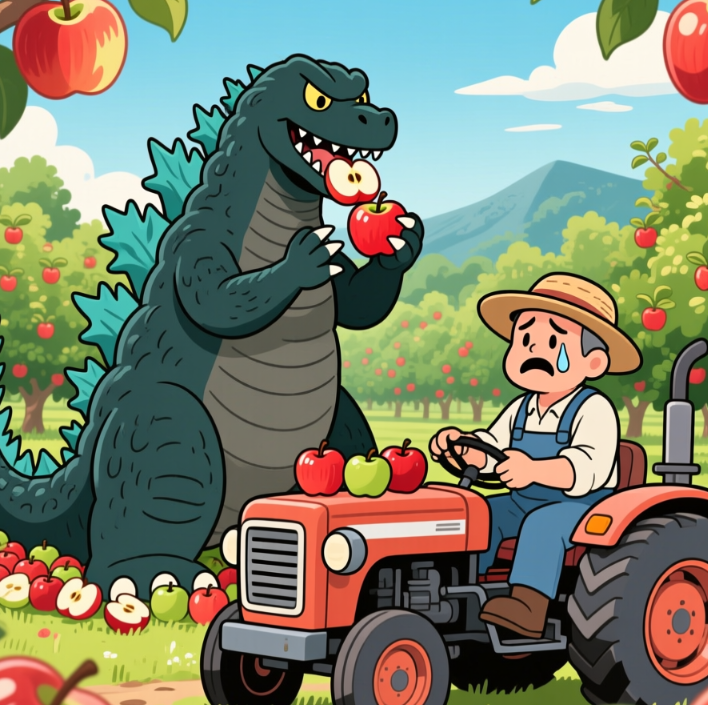
Thanks, Venice. Good enough.
Consider that idea in the context of this write up in Macworld, an online information service: “If Google Helps Apple Beat Google, Does Everyone Lose?” The article states:
Basing Siri on Google Gemini, then, is a concession of defeat, and the question is what that defeat will cost. Of course, it will result in more features and very likely a far more capable Siri. Google is in a better position than Apple to deliver on the reckless promises and vaporware demos we heard and saw at WWDC 2024. The question is what compromises Apple will be asked to make, and which compromises it will be prepared to make, in return.
With all due respect to the estimable Macworld, I want to suggest the key question is: “What does the deal with Apple mean to Google’s argument that it is not a monopoly?”
The two companies control the lion’s share of the mobile device operating systems. The data from these mobile devices pump a significant amount of useful metadata and content to each of these companies. One can tell me that there will be a “Great Wall of Secrecy” between the two firms. I can be reassured that every system administrator involved in this tie up, deal, relationship, or “just pals” cooperating set up will not share data.
Google will remain the same privacy centric, user first operation it has been since it got into the online advertising business decades ago. The “don’t be evil” slogan is no longer part of the company credo, but the spirit of just being darned ethical remains the same as it was when Paul Buchheit allegedly came up with this memorable phrase. I assume it is now part of the Google DNA.,
Apple will continue to embrace the security, privacy, and vertical business approach that it has for decades. Despite the niggling complaints about the company’s using negotiation to do business with some interesting entities in the Middle Kingdom, Apple is working hard to allow its users that flexibility to do almost anything each wants within the Apple ecosystem of the super-open App Store.
Who wins in this deal?
I would suggest that Google is the winner for these reasons:
- Google now provides its services to the segment of the upscale mobile market that it has not been able to saturate
- Google provides Apple with its AI services from its constellation of data centers although that may change after Apple learns more about smart software, Google’s logs, and Google’s advertising system
- Google aced out the totally weak wristed competitors like Grok, OpenAI, Apple’s own internal AI team or teams, and open source solutions from a country where Apple a few, easy-to-manage, easy-to-replace manufacturing sets.
What’s Apple get? My view is:
- A way to meet its year’s old promises about smart software
- Some time to figure out how to position this waving of the white flag and the emails to Google suggesting, “Let’s meet up for a chat.”
- Catch up with companies that are doing useful things with smart software despite the hallucination problems.
The cited write up says:
In the end, the most likely answer is some complex mixture of incentives that may never be completely understood outside the companies (or outside an antitrust court hearing).
That statement is indeed accurate. Score a big win for the Googlers. Google is the Apple pulp, the skin, and the meat of the deal.
Stephen E Arnold, January 27, 2026
Comments
Got something to say?
-

- Subscribe to Beyond Search
Feature archive
News archive

-


