

The Final Word on Tricky Online Shopping Tactics
January 26, 2026
 Another dinobaby post. No AI unless it is an image. This dinobaby is not Grandma Moses, just Grandpa Arnold.
I read a round up of what I call “tricky online shopping tactics.” The data flow from an academic project called WebTAP. The researchers are smart; each hails from either Princeton University or the University of Chicago. Selected data are presented in “Dark Patterns at Scale: Findings from a Crawl of 11K Shopping Websites.” The authors (hopefully just one of them) will do a talk at a conference about tricky retail methods using the jazzier jargon “dark patterns.” The term (whether my dinobaby version or the hip new buzzword) mean the same thing: You are bamboozled into buying stuff you may not want, need, or price check before clicking.
I don’t want to be critical of these earnest researchers. There is a list of the sites that the researchers determined do some fancy dancing. Here it is:
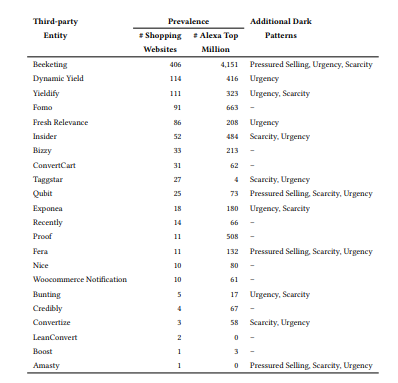
If you want to read the list, you will find it on page 24 of the study team’s 32 page report. I want to point out that sites I know use tricky online shopping tactics are not on the list. Here’s one example of a site I expected to find on the radar of the estimable study team from Princeton and the University of Chicago: Amazon.
But what do the researchers say about dicey online shopping sites I never encounter? The paper states:
We found at least one instance of dark pattern on approximately 11.1% of the examined websites. Notably, 183 of the websites displayed deceptive messages. Furthermore, we observed that dark patterns are more likely to appear on popular websites. Finally, we discovered that dark patterns are often enabled by third-party entities, of which we identify 22; two of these advertise practices that enable deceptive patterns. Based on these findings, we suggest that future work focuses on empirically evaluating the effects of dark patterns on user behavior, developing countermeasures against dark patterns so that users have a fair and transparent experience, and extending our work to discover dark patterns in other domains.
Net net: No Amazon, no Microsoft, no big name online retailers like WalMart, and no product pitch blogs like Venture Beat-type publications. No suggestions for regulatory action to protect consumers. No data about the increase or decrease in the number of sites using dark patterns. Yep, there is indeed work to be done. Why not focus on deception as a business strategy and skip the jazzy jargon?
Stephen E Arnold, January 26, 2026
Comments
Got something to say?
-

- Subscribe to Beyond Search
Feature archive
News archive

-


