

From the Ostrich Watch Desk: A Signal for Secure Messaging?
December 4, 2025
![green-dino_thumb_thumb[1]](https://www.arnoldit.com/wordpress/wp-content/uploads/2025/11/green-dino_thumb_thumb1.gif "green-dino_thumb_thumb[1]") Another dinobaby post. No AI unless it is an image. This dinobaby is not Grandma Moses, just Grandpa Arnold.
Another dinobaby post. No AI unless it is an image. This dinobaby is not Grandma Moses, just Grandpa Arnold.
A dinobaby is not supposed to fraternize with ostriches. These two toed birds can run. It may be time for those cyber security folks who say, “Signal is secure to run away from that broad statement.” Perhaps something like sort of secure if the information presented by the “please, please, please, send us money” newspaper company. (Tip to the Guardian leadership. There are ways to generate revenue some of which I shared in a meeting about a decade ago.)
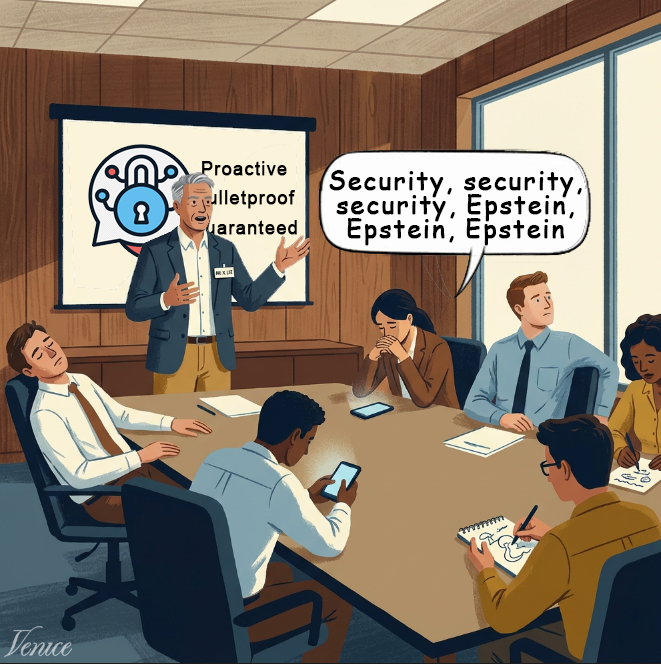
Listening, verifying, and thinking critically are skills many professionals may want to apply to routine meetings about secure services. Thanks, Venice.ai. Good enough.
The write up from the “please, please, please, donate” outfit is “The FBI Spied on a Signal Group Chat of Immigration Activists, Records Reveal.” The subtitle makes clear that I have to mind the length of my quotes and emphasize that absolutely no one knows about this characteristic of super secret software developed by super quirky professionals working in the not-so-quirky US of A today.
The write up states:
The FBI spied on a private Signal group chat of immigrants’ rights activists who were organizing “courtwatch” efforts in New York City this spring, law enforcement records shared with the Guardian indicate.
How surprised is the Guardian? The article includes this statement, which I interpret as the Guardian’s way of saying, “You Yanks are violating privacy.” Judge for yourself:
Spencer Reynolds, a civil liberties advocate and former senior intelligence counsel with the DHS, said the FBI report was part of a pattern of the US government criminalizing free speech activities.
Several observations are warranted:
- To the cyber security vice president who told me, “Signal is secure.” The Guardian article might say, “Ooops.” When I explained it was not, he made a Three Stooges’ sound and cancel cultured me.
- When appropriate resources are focused on a system created by a human or a couple of humans, that system can be reverse engineered. Did you know Android users can drop content on an iPhone user’s device. What about those how-tos explaining the insecurity of certain locks on YouTube? Yeah. Security.
- Quirky and open source are not enough, and quirky will become less suitable as open source succumbs to corporatism and agentic software automates looking for tricks to gain access. Plus, those after-the-fact “fixes” are usually like putting on a raincoat after the storm. Security enhancement is like going to the closest big box store for some fast drying glue.
One final comment. I gave a lecture about secure messaging a couple of years ago for a US government outfit. One topic was a state of the art messaging service. Although a close hold, a series of patents held by entities in Virginia disclosed some of the important parts of the system and explained in a way lawyers found just wonderful a novel way to avoid Signal-type problems. The technology is in use in some parts of the US government. Better methods for securing messages exist. Open source, cheap, and easy remains popular.
Will I reveal the name of this firm, provide the patent numbers in this blog, and present my diagram showing how the system works? Nope.
PS to the leadership of the Guardian. My recollection is that your colleagues did not know how to listen when I ran down several options for making money online. Your present path may lead to some tense moments at budget review time. Am I right?
Stephen E Arnold, December 4, 2025
Comments
Got something to say?
-

- Subscribe to Beyond Search
Feature archive
News archive

-


