

Pavel Durov Outputs His Philosophy That GOATs Do Not Worry.
January 13, 2026
The creator behind the anonymous messaging service Telegram Pavel Durov was charged in 2024 with allegations of drug trafficking, child pornography, organized fraud, and money laundering. Durov is a private individual. He left Russia in 2014 to preserve his freedom of expressive. He provided Le Point with an exclusive interview: “Pavel Durov On His Arrest In France, Macron, Russia, The FBI — And The Fight For Telegram.”
When he was questioned about bad actors using Telegram for nefarious purposes, Durov said that doesn’t make him or his associates who run the platform criminals. He also asserts that the allegations won’t stick, that the French police didn’t correctly follow international procedures, and Telegram how to show them how to proceed.
Durov was questioned if he had any ties with Russia and was close with Putin. He claims that he only met Putin once when he was head of the Russian version of Facebook. He was told that he had to comply with Russian authorities or face the consequences. Durov also denies that he works with Russian authorities and that he only travels to Russia to visit his family.
After sharing his opinion about the current state of technology, Donald Trump, and the world at large. Durov was asked about his competitors. He said that WhatsApp copies everything Telegram does, that Zuckerberg needs more imagination (despite having a large amount of respect for him), and he admires Signal messaging.
He’s had many offers to buy Telegram, including Google which offered him $1 billion. He declines and states:
“It’s not a question of price, Telegram is simply not for sale.”
He continued that he’s still Telegram’s sole shareholder, because he wants to guarantee Telegram’s independence. He doesn’t want to lose control and thusly freedom.
Durov also detailed that he doesn’t have any regrets about Telegram’s development. He keeps a small “core” team of fifty people based in Dubai, because small teams move faster. His brother Nikolai, whom he describes as a genius with two Ph.D.s, is experimenting with AI. Surprisingly he suggests Nikolai no longer works on Telegram with Durov. When queried about what AI will do for the future and jobs, he said.
“We are experiencing unprecedented technological acceleration. For a teenager, adapting is natural. But for experienced professionals, like lawyers or doctors who earn high salaries, the transition will be brutal. Their perceived value in the market could diminish, even if they are excellent. Yes, jobs will disappear. But history shows that others will appear. What matters is the wealth created. Living like a king without having to work like a slave is a form of progress. And as long as we want to create, to bring something to society, there will be a place for everyone.”
Telegram is also money pit. That’s true. The firm’s most recent financial report reveals a loss of more than $220 million US dollars in 2025. But Pavel Durov is a GOAT, or, rather, the greatest of all time in Russia. This is similar to Google’s pronouncements about its role in today’s world. However, Pavel Durov is heading to trial in France for a line up of charges related to some interesting crimes. Is he worried? Nah. GOATs don’t worry.
Whitney Grace, January 13, 2026
Dell Reveals the Future of AI for Itself
January 12, 2026
 Another dinobaby post. No AI unless it is an image. This dinobaby is not Grandma Moses, just Grandpa Arnold.
I was flipping through my Russian technology news feed and spotted an interesting story. “Consumers Don’t Buy Devices Because They Have AI. Dell Has Admitted That AI in Products Can Confuse Customers.” Yep, Russian technology media pays attention to AI signals from big outfits.
The write up states:
the company admits that at least for now this is not particularly important for users.
The Russian article then quotes from a Dell source:
You’ll notice one thing: we didn’t prioritize artificial intelligence as our primary goal when developing our products. So there’s been some shift from a year ago when we focused entirely on AI PCs. We are very focused on realizing the power of artificial intelligence in devices — in fact, all the devices we announce use a neural processor —, but over the course of this year we have realized that consumers are not buying devices because of the presence of AI. In fact, I think AI is more likely to confuse them than to help them understand a particular outcome.
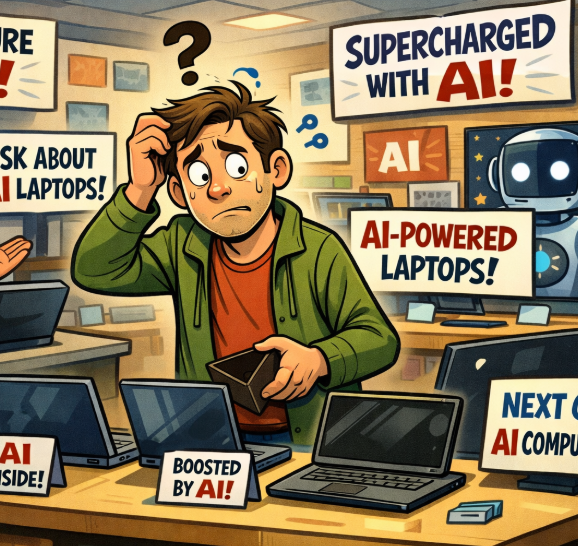
Good enough, ChatGPT.
The chatter about an AI bubble notwithstanding, this Russian news item probes an important issue. AI may not be a revolution. It is “confusing” to some computer customers. The true believers are the ones writing checks to fund the engineering and plumbing required to allow an inanimate machine behave like a human. The word “confusing” is an important one. The messages about smart software don’t make sense to some people.
Dell, to its credit, listened to its customers and changed its approach. The AI goodness is in the device, but the gizmo is presented as a computer that a user can, confused or not, use to check email, write a message, and watch doom scroll by.
Let’s look at this from a different viewpoint. Google and Microsoft want to create AI operating systems. The decade old or older bits of software plumbing have to be upgraded. If the future is smart software, then the operating systems have to be built on smart software. To the believers, the need to AI everything is logical and obvious.
If we look at it from the point of view of a typical Dell customer, the AI jabber is confusing. What’s confusing mean? To me, confusing means unclear. AI marketing is definitely that. I am not sure I understand how typing a query and getting a response is not presented as “search and retrieval.” AI is also bewildering. I have watched a handful of YouTube AI explainer videos. I think I understand, but the reality for me is that AI seems to be a collection of methods developed over the last couple hundred years integrated to index text and output probabilistic sequences. Some make sense to an eighth grader wanting help with a 200 word paragraph about the Lincoln-Douglas debates. However, it wou8ld be difficult for the same kid to get information about Honest Abe’s sleeping with a guy for years. Yep, baffling. Explaining to a judge why an AI system made up case citations to legal actions that did not take place is not just mystifying. The use of AI costs the lawyer money, credibility, and possibly the law license. Yep, puzzling.
Thus, an AI enabled Dell laptop doesn’t make sense to some consumers. Their child needs a laptop to do homework. What’s with the inclusion of AI. AI is available everywhere. Why double up on AI? Dell sidesteps the issue by focusing on its computers as computers.
Several observations are warranted:
- The AI shift at Dell is considered “news” in Russia. In the US, I am not sure how many people will get the Dell message. Maybe someone on TikTok or Reels will cover the Dell story?
- The Google- and Microsoft-type companies don’t care about Dell. These outfits are inventing the future. The firms are spending billions and now dumping staff to help pay for the vision of their visionaries. If it doesn’t work, these people will join the lawyers caught using made up information working as servers at the local Rooster’s chicken joint.
- The idea that “if they think it, the ‘it’ will become reality is fueling the AI boom. Stoked on the sci-fi novels consumed when high school students, the wizards in the AI game are convinced they can deliver smart software. Conviction is useful. However, a failure to deliver will be interesting to watch… from a distance.
Net net: Score one for Dell. No points for Google or Microsoft. Consumers are in the negative column. They are confused and there is one thing that the US economy abhors is a bewildered person. Believe or be gone.
Stephen E Arnold, January 12, 2026
Telegram Notes: About That Money. Nyet.
January 8, 2026
 Another dinobaby post. No AI unless it is an image. This dinobaby is not Grandma Moses, just Grandpa Arnold.
I spotted a news item that surprised me. The GOAT (the greatest of all time in Russian technology) encountered a small banking problem. The automatic teller machine would not work. “$500M in Telegram Bonds Frozen in Russia Due to Sanctions – FT” reports or recycles a Financial Times’ news article that allegedly asserted as true:
Around $500 million worth of bonds issued by the Telegram messaging app in Russia have been frozen due to Western sanctions … The freeze highlights Telegram’s continued exposure to Russian capital despite efforts by its billionaire founder Pavel Durov to distance himself from Moscow…. Telegram has issued a series of bond offerings in recent years including a $1.7 billion issuance in May 2025.
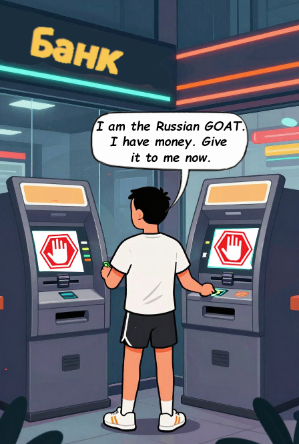
Dead money machines? What’s going on? Thanks, Qwen. Good enough.
Why does the GOAT need some cash? The Moscow Times says:
Telegram said revenue in the first half of 2025 rose more than 65% year-on-year to $870 million. The company nevertheless posted a net loss of $222 million, compared with a net profit of $334 million in the same period a year earlier
That doesn’t answer the question, does it? How about this statement:
the loss was driven by a write-down of Telegram’s holdings of the Toncoin cryptocurrency, whose price fell amid a broader downturn in the crypto market in 2025.
Let’s think about this. The TONcoin is not controlled by Pavel Durov. He gave the TON blockchain technology, the TONcoin, and some other bits and pieces to the TON Foundation. Why? After a spat with the US Securities & Exchange Commission, Mr. Durov and his “core” team cooked up the idea of a foundation special purpose vehicle. The cause of the shortfall is simple. The TONcoin upon which some interesting financial “plays” are dependent has lost some of its value. The alleged currency of the future free of the constraints of the cursed US dollar has fallen in value. I think the TONcoin is down about 65 percent since January 5, 2025 if the data from TradingView.com are semi accurate.
This “drop” has troubled the usually halcyon waters of the pond from which the GOAT sips; for example:
- The TON Strategy Company is trying to shake free from two SEC notes about a failure to hold required shareholder votes. A NASDAQ listed outfit run by Manny Stotz has to follow those pesky US rule
- The AlphaTON Capital outfit is trying to figure out how to recover after a bit of fancy dancing related to an alleged tie up with the Anduril outfit. In contrast to AlphaTON, Anduril is doing quite well and said, “Nope, no AlphaTON deal.” In order to look like a great NASDAQ listed company, AlphaTON bid farewell to an interesting person who was the money manager for AlphaTON. Well, so much for Andrei Grachev of DWF MaaS, DWF Labs, and a former board member of the Russian RACIB outfit.
- And obviously the problem of more revenue and a notable $222 million loss.
Mr. Durov may mash the buttons on Russia’s National Settlement Depository (NSD). Those actions may not be subject to the GOAT’s considerable power. What’s the fix? Perhaps Mr. Durov will have to step in and use his own cash to cover the pitfalls on Telegram’s push to become the global financial system? Do goats bleat?
Stephen E Arnold, January 8, 2026
OpenCode: A Little Helper for Good Guys and the Obverse
January 7, 2026
 Another dinobaby post. No AI unless it is an image. This dinobaby is not Grandma Moses, just Grandpa Arnold.
I gave a couple of talks late in 2025 to cyber investigators in one of those square, fly-over states. In those talks, I showed code examples. Some were crafted by the people on my team and a complete Telegram app was coded by Anthropic Claude. Yeah, the smart software needed some help. Telegram bots are not something lots of Claude users whip up. But the system worked.
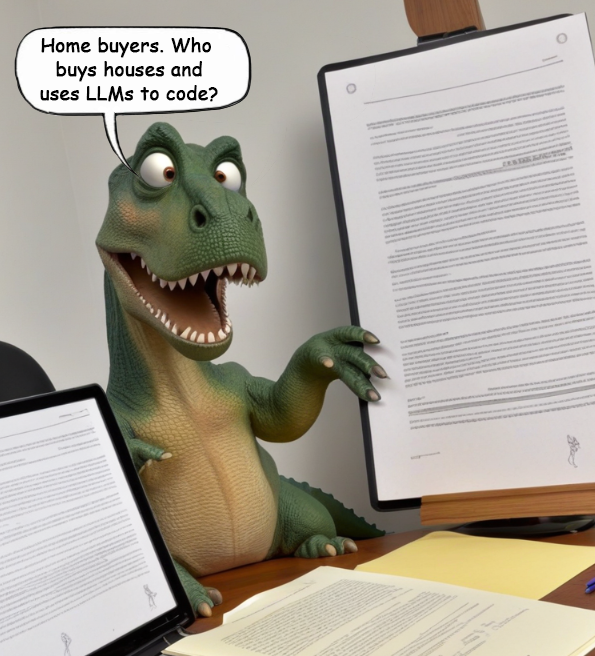
Here I am reading the OpenCode “privacy” document. I look pretty good when Venice.ai converts me from an old dinobaby to a young dinobaby.
One of my team called my attention to OpenCode. The idea is to make it easier than ever for a good actor or a not-so-good actor to create scripts, bots, and functional applications. OpenCode is an example of what I call “meta ai”; that is, the OpenCode service is a wrapper that allows a lot of annoying large language model operations, library chasing, and just finding stuff to take place under one roof. If you are a more hip cat than I, you would probably say that OpenCode is a milestone on the way to a point and click dashboard to make writing goodware and malware easier and more reliable than previously possible. I will let you ponder the implications of this statement.
According to the organization:
OpenCode is an open source agent that helps you write and run code with any AI model. It’s available as a terminal-based interface, desktop app, or IDE extension.
The sounds as if an AI contributed to the sentences. But that’s to be expected. The organization is OpenCode.ai.
The organization says:
OpenCode comes with a set of free models that you can use without creating an account. Aside from these, you can use any of the popular coding models by creating a Zen account. While we encourage users to use Zen*, OpenCode also works with all popular providers such as OpenAI, Anthropic, xAI etc. You can even connect your local models. [*Zen gives you access to a handpicked set of AI models that OpenCode has tested and benchmarked specifically for coding agents. No need to worry about inconsistent performance and quality across providers, use validated models that work.]
The system is open source. As of January 7, 2026, it is free to use. You will have to cough up money if you want to use OpenCode with the for fee smart software.
The OpenCode Web site makes a big deal about privacy. You can find about 10,000 words explaining what the developers of the system bundle in their “privacy” write up. It is a good idea to read the statement. It includes some interesting features; for example:
- Accepting the privacy agreement allows home buyers to be data recipients
- Fuzzy and possibly contradictory statements about user data sales
- Continued use of the service means you accept terms which can be changed.
I won’t speculate on how a useful service needs a long and somewhat challenging “privacy” statement. But this is 2026. I still can’t figure out why home buyers are involved, but I am a clueless dinobaby. Remember there are good actors and the other type too.
Stephen E Arnold, January 7, 2026
Meta 2026: Grousing Baby Dinobabies and Paddling Furiously
January 7, 2026
 Another dinobaby post. No AI unless it is an image. This dinobaby is not Grandma Moses, just Grandpa Arnold.
I am an 81 year old dinobaby. I get a kick out of a baby dinobaby complaining about young wizards. Imagine how that looks to me. A pretend dinobaby with many years to rock and roll complaining about how those “young people” are behaving. What a hoot!
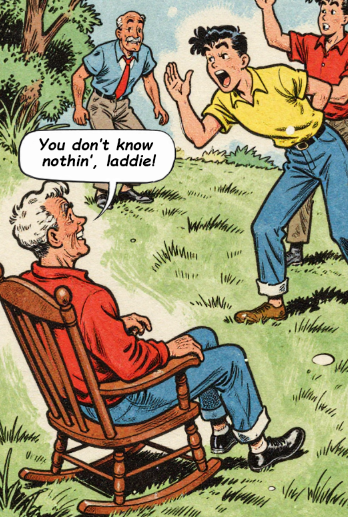
A dinobaby explains to a young, brilliant entrepreneur, “You are clueless.” My response: Yeah, but who has a job? Thanks, Qwen. Good enough.
Why am I thinking about age classification of dinobabies? I read “Former Meta Scientist Says Mark Zuckerberg’s New AI Chief Is ‘Young’ And ‘Inexperienced’—Warns ‘Lot Of People’ Who Haven’t Yet Left Meta ‘Will Leave’.” Now this is a weird newsy story or a story presented as a newsy release by an outfit called Benzinga. I don’t know much about Benzinga. I will assume it is a version of the estimable Wall Street Journal or the more estimable New York Times. With that nod to excellence in mind, what is this write up about?
Answer: A staff change and what I call departure grief. People may hate their job. However, when booted from that job, a problem looms. No matter how important a person’s family, no matter how many technical accolades a person has accrued, and no matter the sense of self worth — the newly RIFed, terminated, departed, or fired feels bad.
Many Xooglers fume online after losing their status as Googlers. These essays are amusing to me. Then when Mother Google kicks them out of the quiet pod, the beanbag, or the table tennis room — these people fume. I think that’s what this Benzinga “zinger” of a write up conveys.
Let’s take a quick look, shall we?
First, the write up reports that the French-born Yann LeCun is allegedly 65 years old. I noted this passage about Alexandr [sic] Wang is the top dog in Meta’s Superintelligence Labs (MSL) or “MISSILE” I assume. That’s quite a metaphor. Missiles are directed or autonomous. Sometimes they work and sometimes they explode at wedding parties in some countries. Whoops. Now what does the baby dinobaby Mr. LeCun say about the 28 year old sprout Alexandr (sic) Wang, founder of Scale AI. Keep in mind that the genius Mark Zuckerberg paid $14 billion dollars for this company in the middle of 2025.
Alexandr Wang is intelligent and learns quickly, but does not yet grasp what attracts — or alienates — top researchers.
Okay, we have a baby dinobaby complaining about the younger generation. Nothing new here except that Mr. Wang is still employed by the genius Mark Zuckerberg. Mr. LeCun is not as far as I know.
Second, the article notes:
According to LeCun, internal confidence eroded after Meta was criticized for allegedly overstating benchmark results tied to Llama 4. He said the controversy angered Zuckerberg and led him to sideline much of Meta’s existing generative AI organization.
And why? According the zinger write up:
LLMs [are] a dead end.
But was Mr. LeCun involved in these LLMs and was he tainted by the failure that appears to have sparked the genius Mark Zuckerberg to pay $14 billion for an indexing and content-centric company? I would assume that the answer is, “Yep, Mr. LeCun was in his role for about 13 years.” And the result of that was a “dead end.”
I would suggest that the former Facebook and Meta employee was not able to get the good ship Facebook and its support boats Instagram and WhatsApp on course despite 156 months of navigation, charting, and inputting.
Several observations:
- Real dinobabies and pretend dinobabies complain. No problem. Are the complaints valid? One must know about the mental wiring of said dinobaby. Young dinobabies may be less mature complainers.
- Geniuses with a lot of money can be problematic. Mr. LeCun may not appreciate the wisdom of this dinobaby’s statement … yet.
- The genius Mr. Zuckerberg is going to spend his way back into contention in the AI race.
Net net: Meta (Facebook) appears to have floundered with the virtual worlds thing and now is paddling furiously as the flood of AI solutions rushes past him. Can geniuses paddle harder or just buy bigger and more powerful boats? Yep, zinger.
Stephen E Arnold, January 7, 2026
ChatGPT Channels Telegram
January 7, 2026
Just what everyone needs: Telegram type apps on the Sam AI-Man platform. What will bad actors do? Obviously nothing. Apps will be useful, do good, and make the world a better place.k
ChatGPT now connects to apps without leaving the AI interface.? ? According to Mashable, “ChatGPT Launches Apps Beta: 8 Big Apps You Can Now Use In ChatGPT.”? ? ChatGPT wants its users to easily access apps or take suggestions during conversations with the AI.? ? The idea is that ChatGPT will be augmented by apps and extend conversations.
App developers will also be able to use ChatGPT to build chat-native experiences to bring context and action directly into conversations.
The new app integration is described as:
“While some commentators have referred to the new Apps beta as a ChatGPT app store, at this time, it’s more of an app directory. However, in the “Looking Ahead” section of its announcement post, OpenAI does note that this tool could eventually ‘expand the ways developers can reach users and monetize their work.’”
The apps that are integrated into ChatGPT are Zillow, Target, Expedia, Tripadvisor, Instacart, DoorDash, Apple Music, and Spotify.? ? This sounds similar to what Telegram did.? ? Does this mean OpenAI is on the road to Telegram like services?
Just doing good. Bad actors will pay no attention.
Whitney Grace, January 7, 2025
Telegram Notes: Is ATON an Inside Joke?
January 2, 2026
![green-dino_thumb_thumb[3]_thumb](https://www.arnoldit.com/wordpress/wp-content/uploads/2026/01/green-dino_thumb_thumb3_thumb.gif "green-dino_thumb_thumb[3]_thumb") Another dinobaby post. No AI unless it is an image. This dinobaby is not Grandma Moses, just Grandpa Arnold.
Another dinobaby post. No AI unless it is an image. This dinobaby is not Grandma Moses, just Grandpa Arnold.
On New Year’s Day, I continued to sift through my handwritten notecards. (I am a dinobaby. No Obsidian for me!) I came across a couple of items that I thought were funny or at the least “inside jokes” related to the beep beep Road Runner spin of a company involved (allegedly) in pharma research into a distributed AI mining company. Yeah, I am not sure what that means either. I did notice a link to an outfit with a confusing deal to manage the company named AlphaTON, captained by a former Cambridge Analytica professional, and featuring a semi-famous person in Moscow named Yuri Mitin of the Red Shark Ventures outfit.
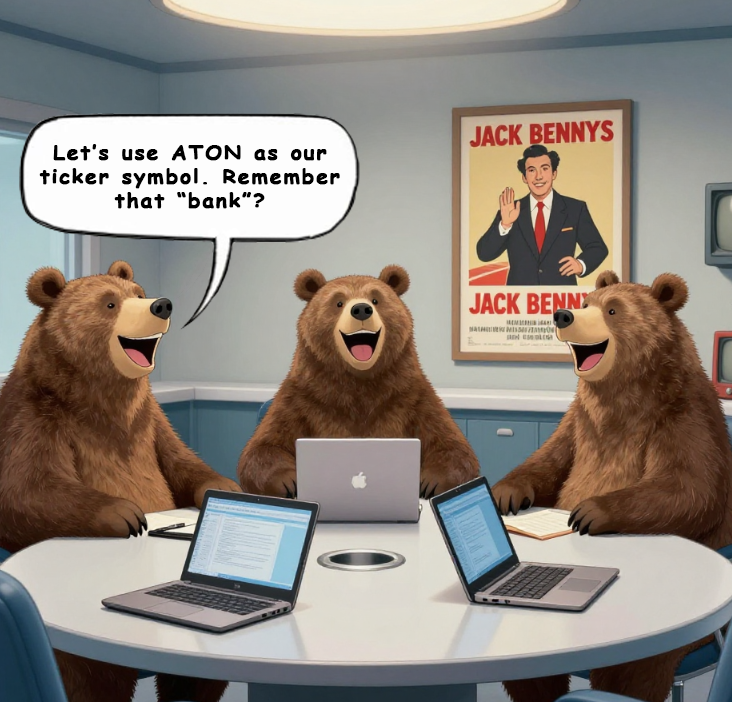
Several financial wizards, eager to tap into US financial markets, toss around names for the NASDAQ’s official ticker symbol. Thanks, Venice.ai. Good enough.
What’s the joke? I am not sure you will laugh outload, but I know of a couple people who would slap their knee and chortle.
Joke 1: The ticker symbol for the beep beep outfit is ATON. That is the “name” of a famous or infamous Russian bank. Naming a company listed on the US NASDAQ as ATON is a bit like using the letters CIA or NSA on a company listed on the MOEX.
Joke 2: The name “Red Shark” suggests an intelligence operation; for example, there was an Israeli start up called “Sixgill.” That’s a shark reference too. Quite a knee slapper because the “old” Red Shark Ventures is now RSV Capital, and it has a semi luminary in Moscow’s financial world as its chief business development officer. Yuri Mitin. Do you have tears in your eyes yet?
Joke 3: AlphaTON’s SEC S-3/F-3 shelf registration for this dollar amount: US$420.69 million. If you are into the cannabis world, “420” means either partaking of cannabis at 4:20 pm each afternoon or holding a protest on April 20th each year. Don’t feel bad. I did not get this either, but Perplexity as able to explain this in great detail. And the “69” is supposed to be a signal to crypto bros that this stock is going to be a roller coaster. I think “69” has another slang reference, but I don’t recall that. You may, however.
Joke 4: The name Alpha may be a favorite of the financial wizard Enzo Villani involved with AlphaTON, but one of my long time clients (a former CIA operations officers) told me that “A” was an easy way to refer to those entertaining people in the Russian Spetsgruppa "A", the FSB’s elite counter-terrorism unit.
Whether these are making you laugh, I don’t know. I wonder if these references are a coincidence. Probably not. AlphaTON, supporting the Telegram TON Foundation’s AI initiative, is just a coincidence. I would hazard a guess that a fellow name Andrei Grachev understands the attempts at humor. The wet blanket is the stock price and the potential for some turbulence.
Financial wizards engaged in crypto centric activities do have a sense of humor — until they lose money. Those two empty chairs in the cartoon suggest people have left the meeting.
PS. The Telegram Notes information service is beginning to take shape. If you want more information about our Telegram, TON Foundation, TON Strategy Company, and AlphaTON, just write kentmaxwell at proton dot me.
Stephen E Arnold, January 2, 2025
Telegram Notes: AI Slop Analyzes TON Strategy and Demonstrates Shortcomings
January 1, 2026
![green-dino_thumb_thumb[3]](https://www.arnoldit.com/wordpress/wp-content/uploads/2025/12/green-dino_thumb_thumb3-1.gif "green-dino_thumb_thumb[3]") Another dinobaby post. No AI unless it is an image. This dinobaby is not Grandma Moses, just Grandpa Arnold.
Another dinobaby post. No AI unless it is an image. This dinobaby is not Grandma Moses, just Grandpa Arnold.
If you want to get a glimpse of AI financial analysis, navigate to “My Take on TON Strategy’s NASDAQ Listing Warning.” The video is ascribed to Corporate Decoder. But there is no “my” in the old-fashioned humanoid sense. Click on the “more” link in the YouTube video, and you will see this statement:

The highlight points to the phrase, “All videos are AI generated…”
The six minute video does not point out some of the interesting facets of the Telegram / TON Foundation inspired “beep beep zoom” approach to getting a “rules observing listing” on the US NASDAQ. Yep, beep beep. Road Runner inspired public lists with an alleged decade of history. I find this fascinating.
The video calls attention to superficial aspects of the beep beep Road Runner company spun up in a matter of weeks in late 2025. The company is TON Strategy captained by Manny Stotz, formerly the president or CEO or temporary top dog at the TON Foundation. That’s the outfit Pavel Durov thought would be a great way to convert GRAMcoin into TONcoin, gift the Foundation with the TON blockchain technology, and allow the Foundation to handle the marketing. (Telegram itself does not marketing except leverage the image of Pavel Durov, the self-proclaimed GOAT of Russian technology culture. In addition to being the GOAT, Mr. Durov is reporting to his nanny in the French judiciary as he awaits a criminal trial on nine or ten serious offenses. But who is counting?
What’s the AI video do other than demonstrate that YouTube does not make easily spotted AI labels obvious.
The video does not provide any insight into some questions my team and I had about TON Strategy Company, its executive chairperson Manual “Manny” Stotz, or the $400 million plus raised to get the outfit afloat. The video does not call attention to the presence of some big, legitimate, brands in the world of crypto like Blockchain.com.
The video tries to explain that the firm is trying to become an asset outfit like Michael Saylor’s Strategy Company. But the key difference is not pointed out; that is, Mr. Saylor bet on Bitcoin. Mr. Stotz is all in on TONcoin. He believes in TONcoin. He wanted to move fast. He is going to have to work hard to overcome what might be some modest potholes as his crypto vehicle chugs along the Information Highway.
The first crack in the asphalt is the TONcoin itself. Mr. Stotz “bought” TONcoins at about a value point of $5.00. That was several weeks ago. Those same TONcoins can be had for $1.62 at about noon on December 31, 2025. Source you ask? Okay, here’s the service I consulted: https://www.tradingview.com/symbols/TONUSD/
The second little dent in the road is the price of the TON Strategy Company’s NASDAQ stock. At about noon on December 31, 2025, it was going for $2.00 a share. What did the TONX stock cost in September 2025? According to Google Finance it was in the $21.00 range. Is this a problem? Probably not for Mr. Stotz because his Kingsway Capital is separate from TON Strategy Company. Plus, Kingsway Capital is separate from its “owner” Koenigsweg Holdings. Will someone care if TONX gets delisted? Yep, but I am not prepared to talk about the outfits who have an interest in Koenigsweg and Kingsway. My hunch is that a couple of these outfits may want to take a ride with Manny to talk, to share ideas, and to make sure everyone is on the same page. In Russian, Google Translate says this sequence of words might pop up during the ride: ?? ?????????, ??????
What are some questions the AI system did not address? Here are a few:
- How does the current market value of TONcoin affect the information in the SEC document the AI analyzed?
- Where do these companies fit into the TON Strategy outfit? Why the beep beep approach when two established outfits like Kingsway Capital and Koenigsweg Holdings could have handled the deal?
- What connections exist between the TON Foundation and Mr. Stotz? What connection does the deal have to the TON Foundation’s ardent supported, DWF Labs (a crypto market maker of repute)?
- Who is president of the TON Strategy Company? What is the address of the company for the SEC document? Where does Veronika Kapustina reside in the United States? Why do Rory Cutaia, Veronika Kapustina, and TON Strategy Company share a residential address in Las Vegas?
- What role does Sarah Olsen, a former Rockefeller financial analyst play in the company from her home, possibly in Miami, Florida?
- What is the Plan B if the VERB-to-TON Strategy Company continues to suffer from the down market in crypto? What will outfits like DWF Labs do? What will the TON Foundation do? What will Pavel Durov, the GOAT, do in addition to wait for the big, sluggish wheels of the French judicial system to grind forward?
The AI did not probe like an over-achieving MBA at an investment firm would do to keep her job. Nope. Hit the pause switch and use whatever the AI system generates. Good enough, right?
What does this AI generated video reveal about smart software playing the role of a human analyst? Our view is:
- Quick and sloppy content
- Failure to chase obvious managerial and financial loose ends
- Ignoring obvious questions about how a “sophisticated” pivot can garner two notes from Mother SEC in a couple of weeks.
Net net: AI is not ready for some types of intellectual work.
Want for more Telegram Notes’ content? More information about our Telegram-related information service in the new year.
Stephen E Arnold, January 1, 2026
Salesforce: Winning or Losing?
December 29, 2025
![green-dino_thumb_thumb[3]](https://www.arnoldit.com/wordpress/wp-content/uploads/2025/12/green-dino_thumb_thumb3.gif "green-dino_thumb_thumb[3]") Another dinobaby post. No AI unless it is an image. This dinobaby is not Grandma Moses, just Grandpa Arnold.
Another dinobaby post. No AI unless it is an image. This dinobaby is not Grandma Moses, just Grandpa Arnold.
One of the people on my team told me at our holiday staff lunch (I had a coupon, thank you), that Salesforce signed up thousands of new customers because of AI. Lunch included one holiday beverage, so I dismissed this statement as one of those wild and crazy end-of-year statements from a person who had just consumed one burrito deluxe and a chicken fajita. Let’s assume the number is correct.
That means whatever the leadership of Salesforce is doing, that team is winning. AI may be one reason for the sales success if true. On the other hand, I had the small chicken burrito and an iced tea. I said, “Maybe Microsoft is screwing up with AI so much, commercial outfits are turning to Salesforce?”

The answer for many in Silicon Valley is, “Go in.” Forget the Chinese focus on practical applications of smart software. Go in, win big. Thanks, Venice.ai. Good enough.
Of course, no one agreed. The conversation turned to the hopelessness of catching flights home and the lack of people in my favorite coupon issuing Mexican themed restaurant in rural Kentucky. I stopped thinking about Salesforce until…
I read “Salesforce Regrets Firing 4000 Experienced Staff and Replacing Them with AI.” The write up is interesting. If the statements in the document are accurate, AI may become a bit of a problem for some outfits in 2026. Be sure to read the original essay by an entity identified as Maarthandam. I am only going to highlight a couple of sentences.
The first passage I noted is:
You cannot put a bot where a human is supposed to be. “We assumed the technology was further along than it actually was.”
Well, that makes sense. High technology folks read science fiction instead of Freddy the Pig books when in middle school. The efforts to build smart software, data centers in space, ray guns, etc. etc. are works in progress. Plus the old admonition of high school teachers, “Never assume, or you will make an “ass” of “u” and “me” seems to have been ignored. Yeah. Wizards.
The second passage of interest to me was:
Executives now concede that removing large numbers of trained support staff created gaps that AI could not immediately fill, forcing teams to reassign remaining employees and increase human oversight of automated systems.
The main idea for me is that humans have to do extra work to keep AI from creating more problems. These are problems unique to a situation. Therefore, something more than today’s AI systems is needed. The “something” is humans who can keep the smart software from wandering into the no man’s land of losing a customer or having a smart self driving car kill the Mission District’s most loved stray cat. Yeah. More humans, expensive ones at that.
The final passage I circled was:
Salesforce has now begun reframing its AI strategy, shifting away from the language of replacement toward what executives call “rebalancing.”
This passage means to this dinobaby, “We screwed up, have paid a consultant to craft some smarmy words, and are trying to contain the damage.” I may be wrong, but the Salesforce situation seems to be a mess. Yeah, leadership Silicon Valley style.
Net net: Is that a blimp labeled “Enron” circling the Salesforce offices?
Stephen E Arnold, December 29, 2025
Telegram Notes: Manny, Snoop, and Millions in Minutes
December 24, 2025
 Another dinobaby post. No AI unless it is an image. This dinobaby is not Grandma Moses, just Grandpa Arnold.
In the mass of information my team and I gathered for my new study “The Telegram Labyrinth,” we saw several references to what may be an interesting intersection of Manuel (Manny) Stotz, a hookah company in the Middle East, Snoop Dog (the musical luminary), and Telegram.
At some point in Mr. Stotz’ financial career, he acquired an interest in a company doing business as Advanced Inhalation Rituals or AIR. This firm owned or had an interest in a hookah manufacturer doing business as Al Fakher. By chance, Mr. Stotz interacted with Mr. Snoop Dog. As the two professionals discussed modern business, Mr. Stotz suggested that Mr. Snoop Dog check out Telegram.

Thanks, Venice.ai. I needed smoke coming out of the passenger side window, but smoke existing through the roof is about right for smart software.
Telegram allowed Messenger users to create non fungible tokens. Mr. Snoop Dog thought this was a very interesting idea. In July 2025, Mr. Snoop Dogg
I found the anecdotal Manny Stotz information in social media and crypto centric online services suggestive but not particularly convincing and rarely verifiable.
One assertion did catch my attention. The Snoop Dogg NFT allegedly generated US$12 million in 30 minutes. Is the number in “Snoop Dogg Rakes in $12M in 30 Minutes with Telegram NFT Drop” on the money? I have zero clue. I don’t even know if the release of the NFT or drop took place. Let’s go to the write up:
Snoop Dogg is back in the web3 spotlight, this time partnering with Telegram to launch the messaging app’s first celebrity digital collectibles drop. According to Telegram CEO Pavel Durov, the launch generated $12 million in sales, with nearly 1 million items sold out in just 30 minutes. While the items aren’t minted yet, users purchased the collectibles internally on Telegram, with minting on The Open Network (TON) scheduled to go live later this month [July 2025].
Is this important? It depends on one’s point of view. As an 81 year old dinobaby, I find the comments online about this alleged NFT for a popular musician not too surprising. I have several other dinobaby observations to offer, of course:
- Mr. Stotz allegedly owns shares in a company (possibly more than 50 percent or more of the outfit) that does business in the UAE and other countries where hookahs are popular. That’s AIR.
- Mr. Stotz worked for a short time a a senior manager at the TON Foundation. That’s an organization allegedly 100 percent separate from Telegram. That’s the totally independent, Swiss registered TON Foundation, not to be confused with the other TON Foundation in Abu Dhabi. (I wonder why there are two Telegram linked foundations. Maybe someone will look into that? Perhaps these are legal conventions or something akin to Trojan horses? This dinobaby does not know.
- By happenstance, Mr. Snoop Dogg learned about Telegram NFTs and at the same time Mr. Stotz was immersed in activities related to the Foundation and its new NASDAQ listed property TON Strategy Company, the NFT spun up and then moved forward allegedly.
- Does a regulatory entity monitor and levy tax on the sale of NFTs within Telegram? I mean Mr. Snoop Dogg resides in America. Mr. Stotz resides allegedly in London. The TON Foundation which “runs” the TON blockchain is in United Arab Emirates, and Mr. Pavel Durov is an AirBnB type of entrepreneur — this question of paying taxes is probably above my pay grade which is US$0.00.
One simple question I have is, “Does Mr. Snoop Dogg have an Al Faker hookah?
This is an example of one semi interesting activity involving Mr. Stotz, his companies (Koenigsweg Holdings Ltd Holdings Ltd and its limited liability unit Kingsway Capital) and the Telegram / TON Foundation interactions cross borders, business types, and cultural boundaries. Crypto seems to be a magnetic agent.
As Mr. Snoop Dogg sang in 1994:
“With so much drama in the LBC, it’s kinda hard being Snoop D-O-double-G.” (“Gin and Juice, 1994)
For those familiar with NFT but not LBC, the “LBC” refers to Long Beach, California. There is much mystery surrounding many words and actions in Telegram-related activities.
PS. My team and I are starting an information service called “Telegram Notes.” We have a url, some of the items will be posted to LinkedIn and the cyber crime groups which allowed me to join. We are not sure what other outlets will accept these Telegram-related essays. It’s kinda hard being a double DINO-B-A-BEEE.
Stephen E Arnold, December 24, 2025
-

- Subscribe to Beyond Search
Feature archive
News archive

-


